Aug 17, 2026
TFSA Investing in Canada: A Guide for Young Canadian Investors
If you’re in your 20s or 30s and trying to build a stronger financial future, your Tax-Free Savings Account (TFSA) can be one of the most useful tools in your financial plan. the challenge is that many young Canadians are balancing rising living costs, housing expenses, student debt and other financial priorities. As a result, it can be tempting to put off investing until you have more money available.
But when it comes to TFSA investing in Canada, starting early can matter more than starting with a large amount. that’s because investing gives your money more time to potentially grow and benefit from compound returns. Even relatively small, consistent contributions can become meaningful over the long term. if you haven’t maximized your TFSA yet, there’s no need to panic. The key is to understand your available contribution room, create a realistic investing strategy and gradually increase your contributions as your financial situation improves.
Why Young Canadians Should Pay Attention to Their TFSA
A TFSA isn’t simply a place to put cash. Depending on the type of TFSA account you choose, it can also be used to hold investments such as stocks, bonds, mutual funds and exchange-traded funds (ETFs). one of its biggest advantages is that investment income and capital gains earned inside the account are generally tax-free. That can make the TFSA particularly valuable for Canadians who are investing for long-term goals.
For younger investors, time can be one of the greatest advantages. you may have several decades before retirement, which gives you more time to ride out market fluctuations and potentially benefit from long-term growth. That doesn’t mean taking unnecessary risks or chasing the latest hot investment. Instead, it means having enough time to build a diversified portfolio that matches your goals and risk tolerance.the important thing is to start with a plan rather than trying to predict which investment will perform best next.
If You’re Behind on Your TFSA, Start With Your Contribution Room
One of the first steps in TFSA investing in Canada is knowing exactly how much contribution room you have available. if you haven’t contributed the maximum amount every year, you may have unused room that can generally be carried forward. This can give young Canadians an opportunity to increase their TFSA contributions when their income or financial situation improves.
However, don’t assume you know your available room based only on how much you remember contributing. Check your current contribution room through the Canada Revenue Agency (CRA) before making a large deposit. going over your available contribution room can result in tax consequences, so accuracy matters.
You Don’t Have to Catch Up All at Once
If you have significant unused TFSA room, it may be tempting to try to fill it immediately. But contributing more than you can comfortably afford could put unnecessary pressure on your budget. instead, consider creating a gradual catch-up strategy. for example, you could:
- Set up automatic monthly TFSA contributions.
- Increase your contribution after receiving a raise.
- Direct part of a tax refund or bonus toward your TFSA.
- Increase contributions when a major monthly expense disappears.
- Review your TFSA strategy once or twice a year.
The goal isn’t to make one huge contribution. It’s to build a habit that you can maintain. for a young Canadian investor, consistency can be more valuable than trying to perfectly time the market.
Invest Your TFSA Based on Your Goals
Another important distinction is that a TFSA is an account, not an investment itself. the money inside your TFSA can potentially be held in different types of investments, depending on the financial institution and account type. Your choice should reflect what you’re saving for, how long you can leave the money invested and how comfortable you are with market fluctuations.
Someone saving for a major purchase in the next few years may need a very different strategy from someone investing for retirement several decades away. for long-term goals, a diversified portfolio may provide an opportunity for growth while spreading risk across different investments. For shorter-term goals, preserving capital and maintaining access to your money may be more important. that’s why the best TFSA strategy isn’t necessarily the investment with the highest potential return. It’s the strategy that fits your timeline, goals, risk tolerance and overall financial plan.
Invest, Don’t Speculate With Your TFSA
It can be exciting to watch a stock suddenly surge or hear about the latest technology that everyone expects to transform the economy. But your TFSA probably shouldn’t become a place for chasing hype. for young Canadian investors, having a long time horizon can make it easier to focus on long-term opportunities rather than short-term market movements. that doesn’t mean every growth stock is a good investment. A company with impressive headlines can still lose significant value, and even experienced investors can’t consistently predict which stocks will outperform. instead of trying to find the next big winner, consider building a diversified investment strategy that reflects your financial goals.
Think Long Term
One of the biggest advantages of starting TFSA investing in Canada at a young age is time. market downturns are inevitable. A long investment horizon can give you more opportunity to stay invested through periods of volatility rather than making decisions based on short-term fear.
For example, a diversified portfolio could include a combination of investments across different companies, industries, geographic markets and asset classes. The appropriate mix depends on your circumstances and risk tolerance. the objective isn’t to eliminate investment risk. It’s to manage it.
Avoid Putting Your TFSA on One Big Bet
Concentrating a large portion of your TFSA in one speculative investment can expose your long-term savings to unnecessary risk. if that investment falls sharply, recovering the lost capital can take years. young investors sometimes assume that having decades until retirement means they can afford to take unlimited risks. In reality, a long time horizon gives you an opportunity to take appropriate investment risk—not a reason to ignore diversification. before buying an investment, ask yourself:
- Do I understand how the investment makes money?
- Does it fit my long-term financial goals?
- Am I comfortable with the possibility of a significant decline?
- Is my portfolio diversified enough?
- Would I still be comfortable holding it during a major market downturn?
If the answer to the last question is no, the investment may not be appropriate for your TFSA.

Your TFSA Is Only One Part of Your Financial Plan
It’s also important not to view your TFSA in isolation. building financial security involves more than investing. Young Canadians may also need to consider an emergency fund, debt repayment, retirement savings and appropriate insurance coverage. for example, life insurance can help protect people who depend on your income, while critical illness insurance may provide financial support if a covered serious illness affects your ability to work or meet your expenses.
The purpose of insurance isn’t to replace investing. Instead, it can help protect the financial foundation you’re working to build. a strong financial plan therefore has two sides: growing your wealth and protecting it from unexpected events. build Your TFSA Around Your Bigger Financial Picture a TFSA can play an important role in your financial plan, but it shouldn’t be the only piece of it. for young Canadian investors, financial priorities can change quickly. You might be saving for a home, building an emergency fund, paying down debt, investing for retirement or simply trying to create more financial flexibility. your TFSA strategy should support those goals rather than compete with them.
Create an Emergency Fund First
Before taking significant investment risk, consider whether you have enough accessible savings to handle an unexpected expense. a broken-down car, temporary loss of income or major home or family expense can quickly force you to sell investments at an inconvenient time. keeping some money in an accessible savings account can provide a financial cushion and allow your long-term investments to remain invested when markets are down.
Don’t Forget About Other Registered Accounts
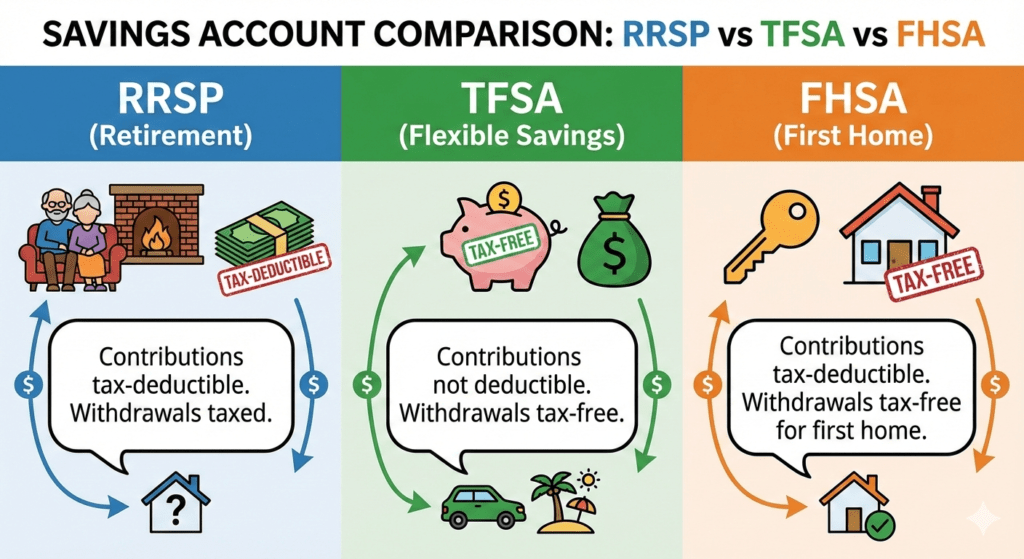
Your TFSA is not necessarily the only tax-advantaged account worth considering. depending on your circumstances and goals, an RRSP or First Home Savings Account (FHSA) may also have an important role in your financial strategy. the right combination depends on factors such as your income, homeownership plans, retirement goals and expected future tax situation. rather than automatically putting every available dollar into your TFSA, consider how each account fits into your broader financial plan.
Protect the Progress You’re Making
Investing is about building wealth, but financial planning is also about protecting that wealth. this is where insurance can become an important part of the conversation for young Canadians. if someone depends on your income—such as a spouse, children or family member—life insurance can help provide financial protection if you die unexpectedly. similarly, disability insurance can help protect your income if an illness or injury prevents you from working, depending on the policy’s terms and coverage. for some Canadians, critical illness insurance can also provide a lump-sum benefit following the diagnosis of a covered condition. these forms of protection serve a different purpose from a TFSA. Your TFSA is designed to help you save and invest, while insurance can help protect your financial plan against risks that investments cannot solve.
Think of Investing and Insurance as Partners
You don’t necessarily have to choose between investing and protecting yourself. a balanced financial plan can include regular TFSA contributions while also making sure you have appropriate insurance and emergency savings. the amount you allocate to each priority will depend on your income, expenses, debts, dependants, financial goals and existing coverage. the goal is simple: build wealth without leaving your financial future unnecessarily exposed to major risks.
Common TFSA Mistakes Young Canadians Should Avoid
Getting started with TFSA investing in Canada doesn’t have to be complicated. However, a few common mistakes can reduce the effectiveness of your strategy or create unnecessary financial stress.
1. Treating Your TFSA Like a Regular Savings Account
The word “savings” in TFSA can be misleading. a TFSA can hold eligible investments, so simply leaving all your money in cash may not be the best approach for long-term goals. Depending on your objectives and risk tolerance, investing some of your TFSA funds may provide greater potential for long-term growth. that said, cash can still make sense for short-term goals. Your investment choices should always match your timeline.
2. Ignoring Your Contribution Room
One of the easiest ways to run into trouble is contributing more than your available TFSA room. before making a large contribution, check your current room with the CRA. Keep track of withdrawals as well, because TFSA rules around withdrawals and restored contribution room can affect when you can put money back into the account.
3. Chasing the Latest Hot Investment
A stock that has doubled recently can look tempting. but past performance doesn’t guarantee future results, and buying an investment simply because everyone is talking about it can expose your portfolio to unnecessary volatility. young investors have an advantage that many older investors don’t: time. Use that advantage to build a disciplined, diversified strategy rather than constantly chasing the next market trend.
4. Investing Money You May Need Soon
Your TFSA can be useful for different financial goals, but investing money you need in the near future can create problems. if markets fall just when you need the money, you may have to sell your investments at a loss. before investing, ask yourself when you’ll need the money and whether you could leave it invested through a significant market downturn.
5. Forgetting About Your Overall Financial Protection
A growing TFSA is valuable, but it doesn’t protect you against every financial risk. if an unexpected illness, disability or death affects your household income, your investment strategy alone may not be enough. that’s why young Canadians should consider their insurance coverage alongside their investments. Depending on your circumstances, life, disability or critical illness insurance may help protect the financial progress you’re working toward.
The Bottom Line for Young Canadian Investors
You don’t need a perfect portfolio or a large amount of money to start. the most important step is to develop a realistic strategy, understand your TFSA contribution room and contribute consistently when your budget allows. over time, disciplined TFSA investing in Canada can become an important part of your broader financial plan. and remember that building wealth is only half of the equation. Protecting your income, family and financial goals with appropriate insurance can help ensure that an unexpected event doesn’t undo years of financial progress. if you’re reviewing your financial plan, consider looking at both sides: how you can grow your money and how you can protect what you’re building.
Ready to Review Your Financial Protection?
Your insurance needs can change as your income, family situation and financial goals evolve. whether you’re looking for life insurance, critical illness coverage or other protection, getting professional advice can help you understand your options.
Get a Quote and take the next step toward building a more complete financial plan.
More Details