Feb 14, 2026
How to Lower Your Electricity Bill in Winter: 7 Practical Strategies That Actually Work
Winter in Canada is beautiful — but it can be expensive. As temperatures drop, heating systems work overtime, appliances consume more energy, and your monthly utility bill can quickly become a source of stress.
The good news? You don’t need a full home renovation to lower your electricity bill in winter. Small behavioral changes can lead to meaningful savings.
Here are seven practical strategies to reduce electricity consumption without sacrificing comfort.
1. Lower Your Thermostat Slightly (It Makes a Bigger Difference Than You Think)
Reducing your room temperature by just one degree Celsius can cut your heating costs by approximately 5–7%. That’s significant for such a small adjustment.
If you lower the thermostat by three degrees overnight or while you’re away from home, you can reduce winter electricity use by an additional 4–5%.
Heating accounts for the largest portion of winter energy consumption in Canadian homes. Even marginal reductions compound over an entire season.
Smart thermostats make this effortless by automating temperature changes based on your schedule.
2. Wash Larger Loads, Less Often
Laundry machines consume energy through both water heating and machine operation.
Instead of running multiple small loads, wait until you have a full load. This improves efficiency per cycle and reduces overall electricity usage.
Better yet, switch to cold water washing.
Cold water:
- Reduces energy consumption
- Protects fabric quality
- Preserves colours longer
- Minimizes wrinkles
According to energy efficiency research, water heating represents a major portion of washing energy costs. Eliminating that component is a direct way to lower your electricity bill in winter.
3. Eliminate “Phantom Loads” (Hidden Energy Drains)
Many devices continue drawing power even when turned off. This is known as standby power or phantom load.
Common culprits include:
- Televisions
- Gaming consoles
- Desktop computers
- Microwaves with digital displays
- Chargers left plugged in
Unplugging unused devices — or using smart power strips — can reduce household electricity use by up to 10%.
The U.S. Department of Energy explains standby energy consumption in detail here:
https://www.energy.gov/energysaver/articles/standby-power
For households looking to lower electricity bills in winter, eliminating phantom loads is low effort with immediate impact.
4. Choose ENERGY STAR® Certified Appliances
When it’s time to replace appliances, prioritize ENERGY STAR® certified products.
These appliances are typically up to 25% more energy efficient than standard models. Over their lifespan, the savings can be substantial.
You can verify certified models through the official ENERGY STAR Canada website:
https://www.energystar.gov
Upgrading major appliances may also improve your home’s overall efficiency rating — which can be relevant when reviewing home-related financial planning or insurance coverage.
If you’re exploring ways to protect your property long-term, you may also want to read our guide on Home Insurance Coverage in Canada
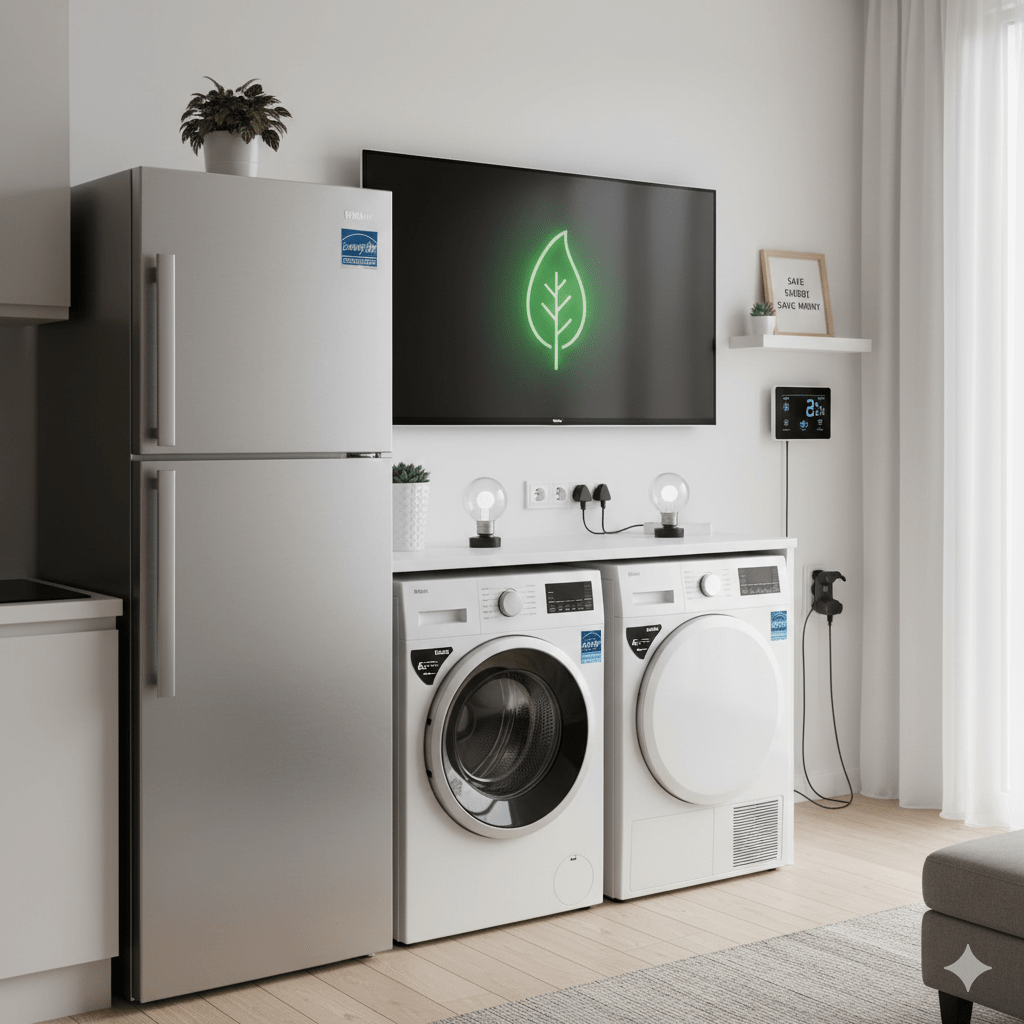
5. Turn Off Lights Consistently
Lighting may not seem like a major expense, but it contributes 5–10% of total household electricity consumption.
Turning off lights when leaving a room becomes powerful when done consistently.
Outdoor lighting is another overlooked source of energy waste. Switching off exterior lights overnight can save up to $40 annually.
If your home uses older bulbs, consider transitioning to LED lighting. LEDs consume significantly less power and last longer, reducing both electricity and replacement costs.
6. Use Sleep Mode — Not Screen Savers
Screen savers were designed to prevent screen burn-in on old monitors. They do not reduce electricity consumption.
Sleep mode does.
Putting computers, laptops, and monitors into sleep mode when not in use can dramatically lower idle energy consumption.
Most modern devices allow you to automate this through system settings. ENERGY STAR provides setup guides depending on device type.
This is one of the simplest technical adjustments to lower electricity bills in winter without altering comfort.
7. Use Curtains Strategically for Passive Solar Heating
Sunlight is free energy.
By opening curtains during sunny winter days, you allow solar radiation to naturally warm interior spaces. Closing curtains at night helps retain that heat.
Studies suggest this can increase indoor temperature by approximately two degrees Celsius during daylight hours — translating into roughly 3% heating cost savings.
Passive solar gain is especially effective in south-facing rooms.
Simple fabric can act as thermal insulation when used intentionally.
Why Lowering Your Electricity Bill in Winter Matters
Reducing electricity consumption isn’t only about saving money.
It also:
- Lowers household carbon emissions
- Reduces strain on energy infrastructure during peak demand
- Improves long-term home efficiency
- Supports sustainable financial planning
Winter utility spikes are predictable. Planning ahead gives you control.
Final Thoughts
Lowering your electricity bill in winter doesn’t require extreme lifestyle changes. A one-degree thermostat adjustment, fewer laundry cycles, unplugging idle electronics, and strategic curtain use — these small, deliberate actions can add up to real savings.
Winter will always be cold. Your electricity bill doesn’t have to be high.
Ready to take control of your household costs this season? For personalized insurance plans that help protect your home and finances through every season, start with a tailored quote from the experts at Bonjour Assurance. Get a comprehensive estimate today and see how you can safeguard your future with confidence: Get a Quote – Bonjour Assurance.
More Details